

What is a Sage 100 Developer?
A Sage 100 developer is a technical specialist with deep expertise in customizing, enhancing, and integrating the Sage 100 ERP platform to meet unique business requirements. These developers combine knowledge of Sage software development tools with programming expertise to create solutions that extend far beyond the original software capabilities.
Key Differences from Standard Consultants
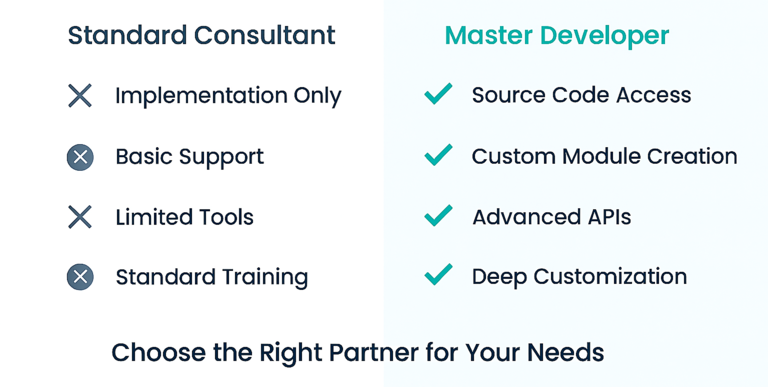
Unlike regular ERP consultants who focus on implementation and training, Master Developers working with Sage 100 possess the ability to directly modify and enhance the underlying system architecture. They can access source code, create custom modules, and develop integrations that standard consultants simply cannot provide.
The biggest distinction is authorization. Master Developers are approved by Sage to work with the Sage 100 source code, so their enhancements function as if they were part of the original software.
Primary Responsibilities and Capabilities
Professional Sage 100 developers handle a comprehensive range of customization tasks that transform how your business operates:
Custom Module Development: Creating entirely new functions and modules tailored to specific industry needs, from specialized inventory tracking to unique manufacturing processes.
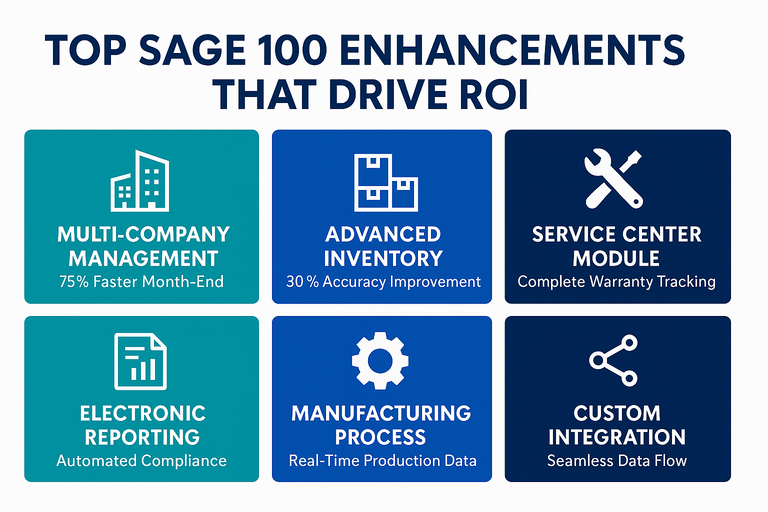
System Integration: Connecting Sage 100 with third-party platforms including CRM systems like Salesforce, freight management solutions, e-commerce platforms, and cloud based platform services.
Process Automation: Streamlining workflows through automated data exchange, eliminating manual processes that consume valuable staff time.
Enhanced Reporting: Developing custom reports and analytics dashboards that provide deeper business insights than standard Sage 100 reports.
Data Migration and Management: Safely transferring and transforming data from legacy systems while maintaining data integrity throughout the process.
What Happened to the Sage 100 Master Developer Program?
Sage 100 began in the mid-1980s as MAS 90, the Master Accounting Series for the 90s, written by State of the Art, Inc. In 1989, State of the Art launched the Master Developer program, which authorized a select group of firms to build enhancements directly on the MAS 90 source code. Sage acquired State of the Art in 1998 and operated it for several years as part of Best Software before bringing it under the Sage name. MAS 90 was rebranded as Sage 100 ERP in 2012.
The developer program evolved with the product, becoming the Development Partner Program and today the Sage Tech Partner Program. “Master Developer” is still the term most of the Sage 100 community uses for partners who build on the source code.
What Master Developer access means today
- Source code access: Sage 100 Tech Partners can request the full application source code. This lets them build enhancements that look and work as if they were part of Sage 100 itself.
- Developer technical support: Direct technical support from Sage for development work.
- Early access: Prerelease software, product roadmap insights, and beta programs, so enhancements can be tested before a new Sage 100 version reaches customers.
Not every Sage 100 project needs source code changes. Many can be handled with Sage’s Business Object Interface (BOI) or custom scripting. Source code access matters for the work those tools can’t reach, and an experienced Master Developer will tell you which approach your project actually needs.
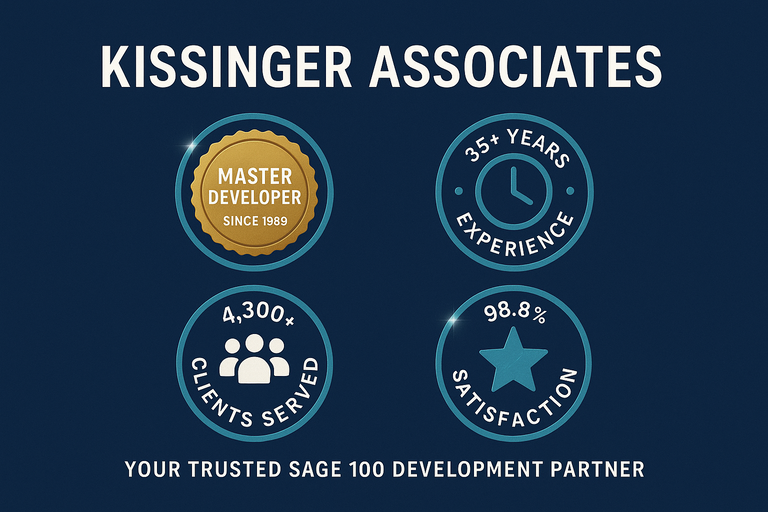
Kissinger Associates joined the Master Developer program when it launched in 1989 and has been part of it continuously for more than 35 years.
Custom Development Services That Drive Results
Sage 100 custom development services encompass a wide range of enhancements that extend the platform's core functionality. With hundreds of available enhancements and the ability to create bespoke solutions, experienced developers can address virtually any business requirement you might have.
Popular Sage 100 Enhancements
The most requested customizations address common business challenges across multiple industries:
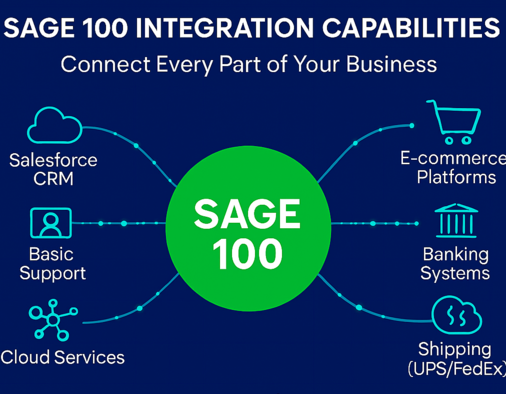
Multi-Company Financial Management For businesses operating multiple entities, custom development can streamline consolidated reporting, automate inter-company transactions, and provide real-time visibility across all operations.
Advanced Inventory and Warehouse Management Multi-bin warehousing capabilities, lot tracking, and advanced fulfillment logic help businesses improve inventory accuracy. Custom barcode integration and mobile warehouse solutions further enhance operational efficiency.
Service Center and Warranty Management For companies providing repair services or managing warranties, custom service center modules track repair orders, manage warranty claims, and provide complete customer service history—all integrated with your Sage 100 system.
Electronic Reporting and Compliance Automate regulatory compliance with custom electronic reporting solutions. Whether you need specialized tax reporting, industry-specific compliance documents, or automated government filings, developers can create solutions that save time and reduce errors.
Manufacturing Process Enhancements Custom manufacturing modules address specific production needs, from advanced bill of materials management to shop floor data collection and quality control tracking.
Integration Capabilities
Modern businesses require their Sage 100 system to communicate seamlessly with other technology platforms. Master Developers create integrations that connect your ERP with:
CRM Platform Integration: Unify customer data between Sage 100 and Salesforce, Microsoft Dynamics CRM, or other platforms. Eliminate duplicate data entry while providing sales teams with real-time access to customer financial information.
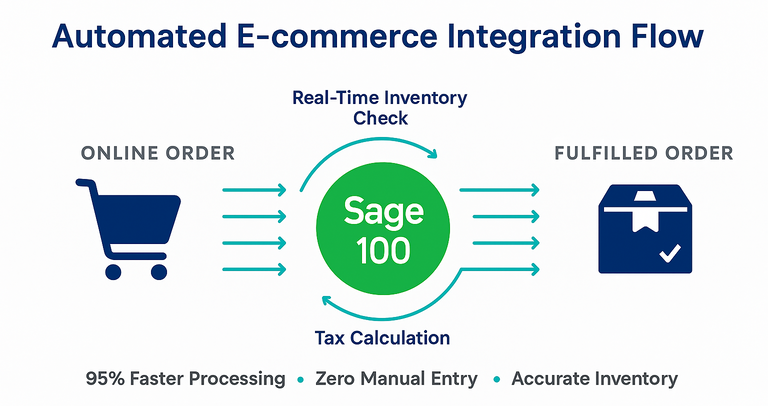
E-commerce System Connections: Real-time inventory synchronization, automated order import, and customer account management between Sage 100 and platforms like Shopify, BigCommerce, or WooCommerce. TruBeauty Concepts achieved 99% faster order processing through e-commerce integration with Web-Stor for Sage 100.
Freight and Logistics Integration: Automate shipping calculations, carrier selection, and tracking updates. Direct integration with UPS, FedEx, and freight management systems eliminates manual processes and reduces shipping errors.
Banking and Payment Systems: Streamline accounts payable and receivable with automated ACH processing, credit card integration, and bank reconciliation. Custom payment portals allow customers to pay invoices online while automatically updating Sage 100.
Industry-Specific Applications: Whether you need integration with specialized manufacturing software, healthcare systems, or distribution platforms, developers can create custom connections that automate data flow between systems.
Ways to Extend Sage 100: Choosing the Right Tool
Sage 100 offers several ways to add functionality, and an experienced developer chooses the lightest tool that gets the job done:
- Custom Office and scripting: User-defined fields, screen changes, and scripts that run automatically within Sage 100. For example, Fayman Group USA’s custom KPI reporting was built with an advanced script, without any source code changes.
- Business Object Interface (BOI): Sage’s programming interface for reading and writing Sage 100 data using the same business rules the software itself follows.
- Visual Integrator: Sage 100’s built-in tool for importing and exporting data, including scheduled imports from other systems.
- Source code changes: For enhancements that need to work inside Sage 100’s own programs. This is the work that requires Master Developer access.
Sage 100 Developer Expertise
When evaluating potential Sage 100 developers, experience and track record are critical factors that directly impact project success. Premier development firms bring decades of specialized expertise to every engagement.
Industry-Leading Experience Metrics
The most established Sage 100 development partners demonstrate:
Longevity in the Sage Ecosystem: Look for developers with 20+ years of experience, dating back to the original MAS 90/200 systems. This historical knowledge proves invaluable when working with companies that have upgraded through multiple Sage versions.
Team Expertise Depth: Combined team experience of 100+ years indicates a firm with diverse skills and the ability to handle complex projects. This depth ensures you're not dependent on a single developer's knowledge.
Proven Implementation Track Record: Developers who have completed 200+ client implementations bring tested methodologies and best practices to your project. They've encountered and solved the challenges you're likely to face.
Current Program Standing: Master Developers renew their status with Sage every year and must stay in good standing under Sage’s program agreement. Ask how long a firm has held its status without interruption.
Specialized Industry Knowledge
Top-tier Sage 100 developers understand that effective customization requires more than technical skills. They bring combined expertise in:
Accounting and Financial Management: CPA-level understanding ensures customizations align with accounting best practices and maintain data integrity. This expertise proves essential when modifying financial modules or creating custom reports.
Industry-Specific Requirements: Whether you're in distribution, manufacturing, or professional services, experienced developers understand your unique challenges and compliance requirements.
Business Process Optimization: Beyond technical implementation, skilled developers identify opportunities to streamline workflows and eliminate inefficiencies through smart automation.
Change Management: Understanding how to implement new systems while minimizing disruption to daily operations ensures successful adoption of custom enhancements.
For more information about how we can tailor our solutions per industry, visit our dedicated industry pages like our Manufacturing or Wholesale & Distribution page. You can find the other industries we serve via our menu.
Choosing the Right Sage 100 Developer Partner
Selecting the appropriate development partner is perhaps the most crucial decision in your customization journey. The right choice ensures project success, while the wrong partner can lead to costly failures and system instability.
Essential Credential Checks
Before engaging any developer, verify these fundamental qualifications:
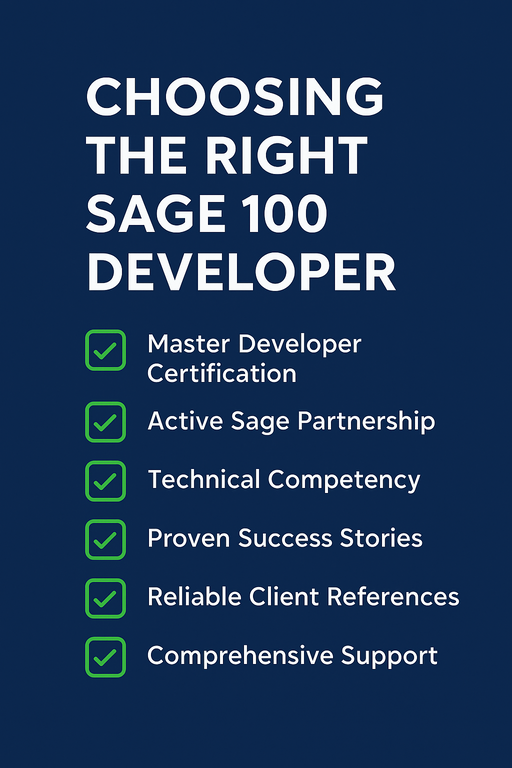
Current Master Developer Status: Ask whether the firm is a current member of the Sage Tech Partner Program (formerly the Master Developer program) with Sage 100 source code access.
Authorized Sage Partnership: Verify the developer maintains an active partnership with Sage. This relationship provides access to latest updates, support resources, and ensures they operate with Sage's endorsement.
Technical Competency Validation: Ask specific questions about their development approach, tools used, and how they ensure upgrade compatibility. Qualified developers will provide detailed, technical responses that demonstrate genuine expertise.
Evaluating Track Record and References
Documented Success Stories: Request detailed case studies showing specific problems solved, solutions implemented, and measurable results achieved. For example Fayman Group USA's $50,000 annual savings through custom KPI reporting exemplifies the concrete results you should expect.
Current Client References: Speak directly with businesses similar to yours. Ask about project management, problem resolution, and ongoing support quality. Long-term client relationships indicate reliable partnership.
Industry Recognition: Awards from Sage software, partner accolades, and industry certifications provide third-party validation of expertise and service quality.
Portfolio Diversity: Developers with experience across multiple industries bring broader perspective and innovative solutions from other sectors that might benefit your business.
Support and Maintenance Commitment
Quality developers provide comprehensive support beyond initial implementation:
Structured Maintenance Agreements: Look for clear service level agreements, defined response times, and transparent pricing for ongoing support.
Proactive System Monitoring: The best partners monitor your customizations for potential issues and proactively address problems before they impact operations.
Upgrade Support Services: As Sage 100 evolves, your customizations need attention. Ensure your developer commits to maintaining compatibility through version updates.
Knowledge Transfer Programs: Professional developers document their work thoroughly and train your staff, ensuring you're not entirely dependent on external support.
How a Sage 100 Development Project Works
Every Kissinger development project follows the same path: requirements analysis, development in a test environment that mirrors your live system, testing with your team, and a planned rollout with training and documentation.
Real-World Results from Sage 100 Development
Here’s what Kissinger’s Sage 100 customization, integration products, and development work have delivered for clients:
- TruBeauty Concepts: Order processing cut from 5–7 minutes to under a minute (99% faster), plus $40,000+ in annual savings by scaling without adding customer service staff.
- Georgia Underground Superstore: Order processing cut from 45 minutes to 2 minutes (96%), avoiding the need for 2–3 new sales hires for one high-volume account.
- MMTC, Inc.: About 20 online orders a day now flow into Sage 100 automatically, with no retyping.
- Fayman Group USA: 300+ hours of overtime and $50,000+ in payroll costs eliminated each year through custom KPI reporting built with Sage 100’s scripting tools.
- Pajunk Medical Systems: 40+ hours a week of manual work eliminated with touchless EDI between GHX and Sage 100.
- DSG, Inc. (Sage 100 reseller partner): Uses EDI Advantage to help its customers cut EDI compliance fines, which can exceed $100,000, to insignificant levels.
Integration and API Development Deep Dive
Modern business operations demand seamless connectivity between systems. Sage 100 developers create sophisticated integrations that eliminate data silos and automate cross-platform processes.
E-commerce Integration Excellence
The growth of online sales makes Sage 100 e-commerce integration increasingly critical:
Real-Time Inventory Synchronization: Prevent overselling with instant inventory updates across all sales channels. Custom integrations ensure available quantity reflects current stock levels, pending orders, and allocated inventory.
Automated Order Processing: Orders flow directly from your website into Sage 100, automatically checking credit limits, calculating taxes, and determining shipping costs. Georgia Underground Superstore cut order processing time by 96% this way.
Customer Account Management: Synchronize customer data, order history, and account status between systems. Customers can check order status, view invoices, and make payments online while all data updates in Sage 100.
Dynamic Pricing Updates: Special pricing, quantity breaks, and promotional offers automatically synchronize from Sage 100 to your e-commerce platform, ensuring pricing accuracy across channels.
EDI Integration Solutions
Electronic Data Interchange remains crucial for many industries, and custom EDI integration eliminates manual processing:
Automated Document Exchange: Custom EDI solutions automatically process purchase orders, invoices, advance ship notices, and other documents without manual intervention.
Trading Partner Compliance: Meet specific requirements from major retailers and distributors with customized document mapping and validation rules.
Error Handling and Notifications: Intelligent error detection and correction mechanisms ensure smooth document flow while alerting staff to exceptions requiring attention.
Cost Reduction: When a trading partner allows a direct connection (AS2 or SFTP), EDI Advantage can bypass a VAN entirely, eliminating per-transaction fees and giving you complete control over your EDI processes. Pajunk eliminated 40+ hours of weekly manual processing through EDI integration with EDI Advantage.
Custom API Development
For unique integration requirements, developers create custom APIs that enable:
Mobile Application Support: Field sales and service teams access real-time Sage 100 data through custom mobile applications, enabling order entry, inventory checks, and customer account management from anywhere.
Cloud Platform Integration: Connect Sage 100 with cloud based platform services for enhanced functionality, from advanced analytics to AI-powered demand forecasting.
IoT Device Connectivity: Manufacturing and warehouse operations benefit from direct integration with sensors, scales, and other devices that feed data directly into Sage 100.
Partner System Integration: Create secure APIs that allow suppliers, customers, or other partners to exchange data with your Sage 100 system while maintaining complete control over access and permissions.
Kissinger API 100: For businesses that need a modern connection to Sage 100, Kissinger API 100 gives other systems a REST API. It’s built natively in ProvideX, the language Sage 100 is written in. It keeps a real-time mirror of your Sage 100 data, sends webhooks when data changes, and queues every write with a unique job ID so each update can be tracked. Learn more about Kissinger API 100.
Investment Considerations and ROI Planning
Understanding the investment required for Sage 100 custom development helps businesses plan effectively and set realistic expectations for their enhancement projects.
Factors Influencing Project Investment
Several variables impact development costs and timelines:
Complexity of Requirements: Simple report modifications require minimal investment, while comprehensive system integrations demand more resources. Be specific about your needs to receive accurate project estimates.
Number of Integration Points: Each system connection requires analysis, development, and testing. Projects involving multiple integrations naturally require larger investments but often deliver proportionally greater returns.
Data Migration Scope: Converting historical data from legacy systems adds complexity. The volume and condition of existing data significantly impact project timelines and costs.
User Training Requirements: Organizations with many users or multiple locations need comprehensive training programs. Factor in the cost of temporary productivity decreases during the learning curve.
Ongoing Support Needs: While initial development represents the largest investment, budget for ongoing maintenance, updates, and enhancements as your business grows.
Maximizing Your Sage 100 Investment
Professional developers help maximize ROI through:
Phased Implementation Approaches: Breaking large projects into phases allows earlier realization of benefits while spreading investment over time.
Focus on High-Impact Areas: Experienced developers identify customizations offering the greatest return, prioritizing development efforts accordingly.
Scalability Planning: Well-designed customizations grow with your business, avoiding the need for costly redesigns as operations expand.
Knowledge Transfer: Ensuring your team can maintain and extend customizations reduces long-term support costs while increasing value realization.
Future-Proofing Sage 100
Technology continues to evolve rapidly, and your Sage 100 customizations must be designed to adapt to changing business needs and platform updates.
Emerging Technology Trends
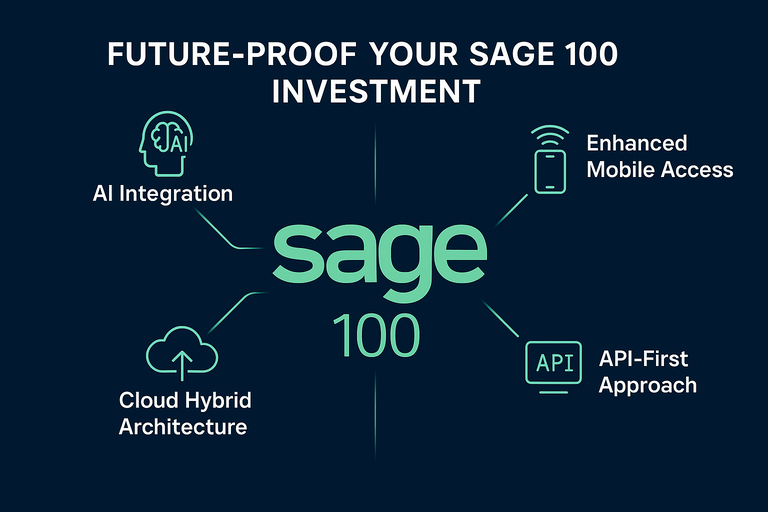
Artificial Intelligence Integration: AI-powered analytics, demand forecasting, and process automation increasingly augment traditional ERP functions. Forward-thinking developers prepare for these integrations.
Enhanced Mobile Capabilities: The mobile workforce demands comprehensive access to ERP functions. Modern customizations consider mobile-first design principles.
Cloud Hybrid Architectures: While Sage 100 remains primarily on-premise, integration with cloud services for analytics, backup, and extended functionality becomes increasingly important.
API-First Development: The proliferation of specialized business applications demands robust API strategies that enable easy future integrations.
Ensuring Upgrade Compatibility
Adherence to Sage Standards: Following official Sage development guidelines ensures customizations remain compatible with platform updates.
Modular Architecture Design: Well-structured customizations isolate functionality, making updates and modifications easier while reducing upgrade risks.
Comprehensive Documentation: Detailed technical documentation enables future developers to understand and maintain customizations, protecting against knowledge loss.
Regular Compatibility Testing: Proactive testing with new Sage 100 versions identifies potential issues before they impact production systems.
Planning for Business Growth
Scalable customizations accommodate business expansion:
Multi-Company Architecture: Even single-entity businesses benefit from customizations designed to support future acquisitions or divisions.
Volume Scalability: Ensure customizations maintain performance as transaction volumes grow with your business success.
Feature Extensibility: Modular design allows adding new features without redesigning existing customizations.
Integration Flexibility: Open architectures facilitate adding new systems and platforms as your technology stack evolves.
The Kissinger Associates Advantage
When selecting a Sage 100 developer, experience, program standing, and proven results matter. Kissinger Associates brings unique advantages to every client engagement:
Unmatched Master Developer Heritage
As a member of the Master Developer program since 1989, Kissinger Associates offers:
- Founding Member: Part of the Master Developer program continuously since it launched in 1989
- Source Code Access: Exclusive ability to create deep customizations unavailable to standard developers
- Pre-Built Solutions: Library of proven enhancements ready for implementation
- Direct Sage Relationship: Early access to Sage 100 prerelease software and roadmap updates through the Tech Partner Program
Comprehensive Service Capabilities
Beyond basic development, Kissinger Associates provides:
- Full-Service ERP Consulting: From selection through implementation and ongoing support
- Industry-Specific Solutions: Specialized expertise in manufacturing, distribution, and service industries
- Integrated Service Offerings: Complementary e-commerce consulting and EDI integration services
- Business Process Expertise: CPA-level accounting knowledge combined with technical skills
Proven Client Success
With 2000+ successful client implementations, Kissinger Associates delivers:
- Quantifiable Results: Documented annual savings of $40,000+ (TruBeauty Concepts) and $50,000+ (Fayman Group USA)
- Long-Term Partnerships: Clients like Fayman Group USA have relied on Kissinger for over a decade, and reseller partner DSG, Inc. for nearly 30 years
- 98.8% Client Satisfaction: Exceptional satisfaction ratings demonstrate consistent delivery
Already working with a Sage 100 reseller? We regularly partner with other Sage resellers on development and integration projects, so your existing relationship stays intact.
Frequently Asked Questions
Is Sage 100 Master Developer still an official Sage program?
The program has changed names over the years. It began as the Master Developer program in 1989, became the Development Partner Program, and is now the Sage Tech Partner Program. “Master Developer” is still the term the Sage 100 community uses for partners with source code access.
Do all Sage 100 customizations require source code changes?
No. Many projects can be handled with scripting, Custom Office, the Business Object Interface, or Visual Integrator. Source code changes are for enhancements that must work inside Sage 100’s own programs.
Will my customizations survive a Sage 100 upgrade?
They can, if they’re built to Sage’s development standards and tested against each new release. Master Developers get early access to prerelease versions, so compatibility can be tested before you upgrade.
Can a Master Developer work with my current Sage reseller?
Yes. Kissinger regularly partners with other Sage resellers, so you keep your existing relationship.
How much does Sage 100 custom development cost?
It depends on scope: how many systems are being connected, how much data is involved, and how many users need training. A small report change is a modest project, while a multi-system integration is a larger one. A short discovery call is the quickest way to get a realistic estimate.
Take Action: Elevate Your Sage 100 System Today
Your Sage 100 system holds untapped potential that professional custom development can unlock. Whether you need to automate manual processes, integrate with other systems, or create entirely new functionality, the right developer partner makes transformation possible.
The difference between struggling with software limitations and leveraging technology for competitive advantage comes down to choosing the right Sage 100 developer. With Master Developer source code access since 1989, decades of proven experience, and a track record of delivering measurable results, you can confidently invest in customizations that drive real business value.
Don't let another day pass with inefficient processes, manual workarounds, or missed opportunities. Professional Sage 100 development can pay for itself through improved efficiency, reduced errors, and better decision-making capabilities.
Ready to explore what custom development can do for your business? Contact Kissinger Associates today for a comprehensive assessment of your Sage 100 system. Our team will evaluate your current setup, identify automation opportunities, and provide a detailed roadmap for achieving your business objectives through proven custom development solutions.
Transform your Sage 100 investment from a basic accounting system into a powerful business automation platform. The journey to increased efficiency, improved profitability, and competitive advantage starts with a single conversation.